Wedding photography is one of the most rewarding yet high-pressure genres in the industry. You’re responsible for capturing some of the most important moments in people’s lives, often under tight timelines and changing conditions. The good news? The core skills can be learned and improved with preparation and practice.
Tips, Gear, and Advice for Aspiring Photographers
Key Tips for Beginners
- Master the fundamentals: Strong knowledge of exposure, shutter speed, aperture, ISO, and composition is essential. Weddings move quickly, so you need to make good decisions instinctively.
- Direct your subjects confidently: Learn how to pose and guide couples, families, and bridal parties so you get natural yet flattering shots without wasting time.
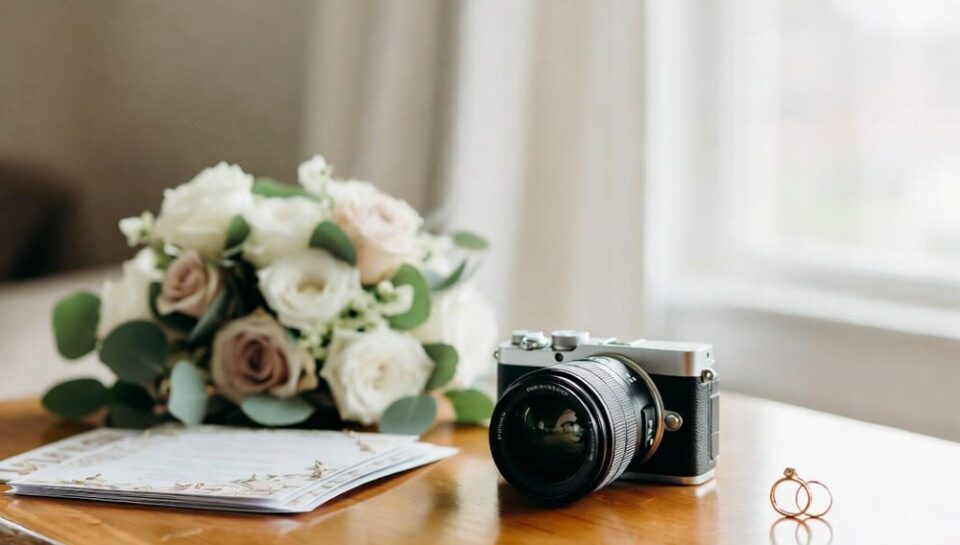
- Stay detail-oriented: Pay attention to small but meaningful elements — rings, flowers, invitations, and emotional expressions.
- Prepare for different lighting situations: Practice working with natural light and supplemental lighting to handle indoor ceremonies, outdoor portraits, and evening receptions.
- Develop a shot list mindset: Know the must-have images (first look, vows, family formals, etc.) while staying flexible for candid moments.
Essential Gear
A solid starting kit includes:
- A reliable DSLR or mirrorless camera body (consider a backup body for peace of mind).
- Versatile lenses: wide-angle for ceremony and reception spaces, 50mm or 85mm primes for portraits, and telephoto zooms for candid shots.
- Off-camera flash and lighting modifiers for low-light situations.
- Must-have accessories: extra batteries, memory cards, a sturdy tripod or monopod, and lens filters as needed.
Many pros also recommend exploring creative lens options and useful add-ons that make the day run smoother.
Common Mistakes to Avoid
While every photographer’s journey is different, rushing setup, neglecting backups, and failing to communicate with the couple are frequent pitfalls beginners encounter. Stay organized, double-check your equipment, and keep the client’s vision in mind at all times.
Final Advice
Wedding Photography is a high-stakes field that requires mastery of photography basics, the ability to control your subjects, and of course, attention to detail. All of these skills can be learned. Take advantage of educational resources — watch videos on full wedding day workflows, study lighting techniques, explore different photography styles, and build your kit thoughtfully.
Stay calm under pressure, be kind to everyone involved, and focus on telling the couple’s unique story through your images. With time and experience, you’ll move from nervous beginner to confident professional who delivers beautiful, lasting memories.
Ready to start your wedding photography journey? Invest in good gear, keep learning, and shoot as many practice sessions as possible. The best way to improve is to get out there and do it.